

Tenant Satisfaction Measures 2025/26
The Regulator of Social Housing (RSH) sets out their expectations of all Registered Providers (RPs) in the Regulatory Standards. The Transparency, Influence and Accountability Standard requires all registered providers of social housing to collect and report annually on their performance through the Tenant Satisfaction Measures (TSMs).
TSM’s help the RSH monitor how social housing landlords in England are performing in their duties of providing good quality homes and services. They also provide visibility and transparency of how landlords are performing across a total of 22 measures: including ten operational measures and 12 tenant perception measures.
The information from the TSMs has been helping EPIC gain valuable feedback from tenants across key areas of our business – including overall satisfaction with us as a landlord, repairs, anti-social behaviour, complaints, communication and lots more.
Summary of Approach for the 12 Tenant Perception Measures
Our latest analysis was carried out as a survey of all tenants using a mixed approach that includes online, postal and telephone responses. The collection methods used were chosen to be as inclusive as possible to provide tenants with an opportunity to respond using their preferred method of communication. The survey was conducted on EPIC’s behalf by Acuity.
Acuity Benchmarking is the national smaller housing providers’ benchmarking network in England. The network has 150 members who own/manage 75,000 homes across England. Acuity offered a tailored approach to meet EPIC’s needs and a range of methodologies to optimise data collection in a way that best suits tenants’ needs. The data measures and definitions are driven and set using the requirements of the Regulator of Social Housing (RSH) and Acuity has been commissioned to work within these requirements.
Survey outcomes are presented through innovative reports and dashboards, providing us, as an Acuity client, with astute analysis and the ability to directly access our results. Acuity also offers interactive workshops and an array of follow-on research solutions to delve deeper into the findings and determine the necessary actions for improvement.
For 2025/26, fieldwork started on 24 June 2025 with emails being sent to every tenant where we hold valid email addresses, the email included a link to complete the survey online. The online survey ended on 28 August 2025 and was followed up with postal questionnaires for anyone who had not responded. In addition, a telephone survey ran concurrently with the postal survey to capture as many responses as possible and to provide maximum opportunity and ways tenants could respond.
The surveys were conducted following the requirements and guidance as set by the RSH. No weighting has been applied in generating the perception measure scores. All EPIC households have been surveyed, including leaseholders, shared owners and those tenants living in supported housing.
Acuity and the RSH suggest that landlords with fewer than 10,000 properties should aim for survey results with a margin of error of ±4% to be confident in their accuracy. EPIC received 516 responses, which is enough to ensure the findings are reliable within a ±3.4% margin – well within the recommended limit.
The target was to achieve a minimum of 302 responses to attain a suitable margin of error and by 28 August 2025 a total of 516 responses had been received; 232 online, 62 by post and 222 by telephone interview. This represents a response rate of 38%.
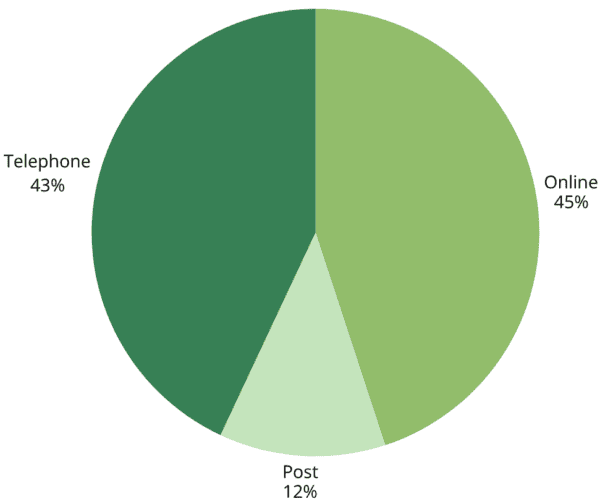
No tenants were excluded due to exceptional circumstances (in line with the TSM regulations), and ten £25 shopping vouchers were offered as an incentive for taking part in the survey.
All responses where tenants expressed dissatisfaction or concerns in relation to their tenancy or property including damp and mould have been followed up to see if there are any outstanding actions we still needed to address to resolve the issues raised.
Summary of Representativeness
When collecting the tenant perception measures, we contacted all tenants, removing any sample approach. As part of the data collection, we were able to collect data in relation to representativeness which included, but was not limited to the following areas:
- Age
- Charge type
- Location
- Ethnicity
- Nationality
- Tenancy type
- Tenancy length